
Prominent Members of the Almqvist Family
Stemming from Harald Magni Almqvist (1657-1711)
of Ölmstad and Visingsö
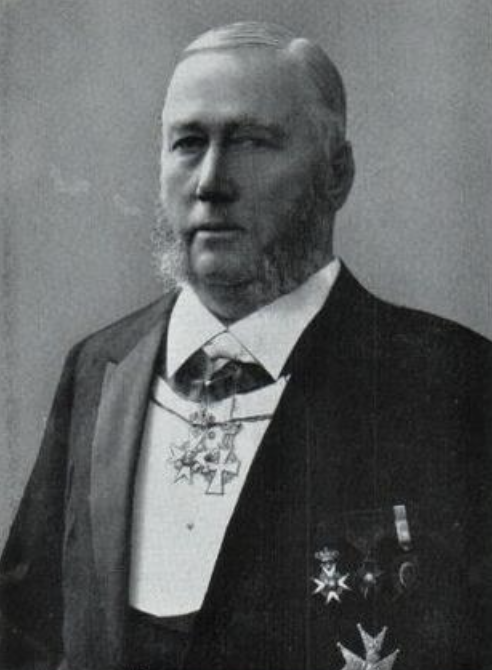
Sven Alexander Almqvist (1840-1931): An engineer of world-historical consequence. The Zoroaster, launched in 1878, was not an incremental improvement on existing technology—it was a conceptual revolution: a vessel designed from the keel up to carry liquid petroleum in bulk across open water. Every supertanker that has since crossed the Persian Gulf, the North Sea, or the Strait of Hormuz is a direct descendant of that idea. Together with Ludvig Nobel, he solved the fundamental engineering problem of putting oil in the hull of a ship without it becoming unstable through distributing it across tanks. His subsequent chairmanship of Götaverken—which he reorganized from a struggling yard into the world's largest shipyard by launched tonnage in the 1930s—confirms that the Zoroaster was not a one-off. He was a builder of institutions as much as ships. He lived to 90, produced eight children, and left a family line of remarkable durability. His impact on the modern global economy—every subsequent tanker, the entire petroleum logistics industry—is immeasurable.
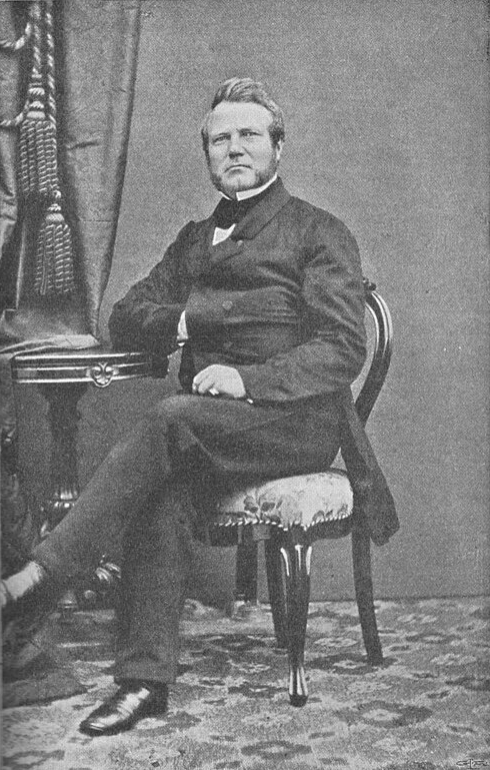
Ludvig Teodor Almqvist (1818–1884) The family's supreme servant of the Swedish state, and the figure who most fully embodied what a 19th-century Swedish professional dynasty could achieve. His career was one of almost unbroken institutional ascent: Cabinet Minister for Civil Service Affairs in De Geer's first government, Supreme Court Justice in 1860, Chief Justice of the Svea Court of Appeal in 1867, doctorate in law in 1868, Cabinet Minister for Justice in De Geer's second government, and finally Knight of the Order of the Seraphim in 1882 — the highest chivalric honour of the Kingdom of Sweden, awarded to fewer than eight living persons at any one time. His reforms of Sweden's civil service apparatus modernised the administrative machinery of the state at the precise moment Sweden was industrialising and needed that machinery to function. His daughter Lina married the Prime Minister. His son Robert Magnus founded Sweden's greatest academic publisher. His legacy radiated outward through virtually every branch of the family that followed him.

Erik Almqvist, Baron of Keith Marischal (b. 1969) The most extraordinary figure in the modern lineage. The independent world firsts, including the world’s first scientific calculation of broadband speed impact, anchor his position. The rescue of universities facing existential threats and elevation to world-class status, the creation of the Networked Society City Index, the financial rescue of Mobily, a leading telecom operator, and the establishment of Africa's first supranational cybersecurity agency—protecting the digital infrastructure of 1.5 billion people at a moment when cyber warfare has become the defining frontier of geopolitical conflict—are all major achievements. Beyond the work itself, he carries a unique historical identity: he is the Baron of Keith Marischal, a Scottish dignity established in AD 1150—predating Magna Carta by more than sixty years and with deep connections to the Declaration of Arbroath, the Scottish declaration of independence. He is simultaneously the family's most impactful contemporary figure and carries its deepest ancient roots through his Fraser-Keith bloodline.
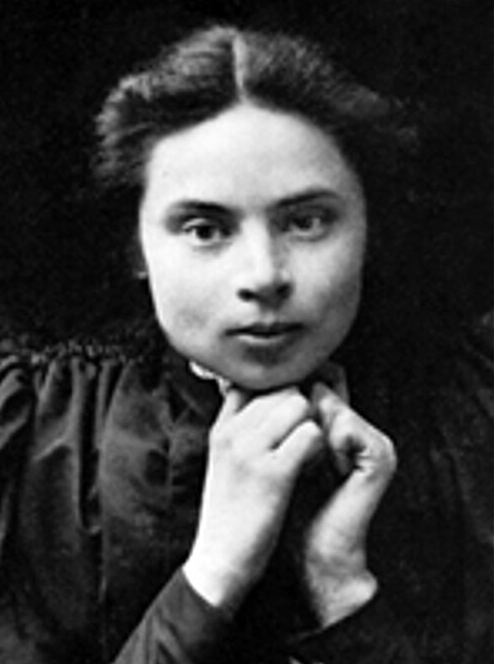
Ester Almqvist (1869–1934) The family's most important cultural figure and one of its most poignant. A painter of genuine greatness who received almost no recognition during her lifetime — a fate common to female artists of her era regardless of talent. Her 2,083 catalogued works, now held principally at Malmö Konstmuseum, represent one of the most substantial individual artistic legacies of any Swedish painter of her generation. She exhibited at the 1904 St. Louis World's Fair — a genuinely international stage — and her Expressionist canvases were later recognised by critics as anticipating developments in Swedish modernism that would not be mainstream for another two decades. She was ahead of her time in a way that her time refused to acknowledge. The family should be proudest of her precisely because she achieved what she achieved without encouragement, without institutional support, and against the structural resistance of a male-dominated art world.
Robert Magnus Almqvist (1857–1938) Son of Ludvig Teodor and co-founder of Almqvist & Wiksell, which became and long remained Sweden's pre-eminent academic publisher. Legal texts, scientific journals, scholarly monographs, government reports — the press shaped Swedish intellectual and professional life for over a century. Robert Magnus was the commercial and organisational intelligence behind the venture, translating his father's legal and institutional connections into a publishing operation of national significance. He lived to 81 and fathered the historian Sven Almqvist, who preserved the family's documentary record. A quiet but durably important figure.
Carin Margareta Christina Almqvist (1938-2009). Represents the family's most direct contemporary contribution to Swedish social reform. Projekt Humlan — her rutavdrag social enterprise — uses Sweden's household services tax deduction system as the mechanism for empowering low-income workers, particularly women in the cleaning and domestic services sector, by formalising their employment, improving their conditions, and connecting them to the welfare system they are otherwise excluded from. This is social innovation in the truest sense: identifying a gap between policy intent and lived reality, and building a practical bridge. In the tradition of Ludvig Teodor's civil service reforms and Johan Magnus's liberal theology, Carin is the family's 21st-century reformer — operating not through government but through enterprise.